Fetching Live Market Data...
When you make a trade, you should have a clear target of where you expect to get out
William Delbert Gann – 1949
The Battle Between News Facade and Chart Reality
Over the past 24 hours, the market has been inundated with a flurry of news surrounding Ethereum. From discussions about Account Abstraction (EIP-7702) brought on by the Pectra upgrade, to concerns over spot ETF outflows, and the widespread adoption of Layer 2 scaling solutions — these developments have left many retail investors bewildered. On the surface, the fundamentals appear to send contradictory signals: on one hand, we see technological breakthroughs and sustained institutional accumulation (such as Bitmine Immersion Technologies buying over 120,000 ETH during the dip); on the other hand, there is price weakness and the historic gloom of potentially closing three consecutive quarters in the red — ETH fell 28.28% in Q4 2025, another 29.26% in Q1 2026, and is already down over 18% in Q2 2026.
However, for someone who has navigated bank trading rooms for over 20 years, this news is often merely a smokescreen released by market makers to align with chart movements. While retail investors are still arguing over whether every headline is bullish or bearish, Smart Money has long left indelible marks on the charts.
I recall a veteran colleague in the trading room who once said something I’ve never forgotten: “Retail reads newspapers; institutions read charts. When retail investors are too excited to contain themselves over a piece of news, that’s when institutions are quietly distributing their holdings.” Today, from the perspective of a former bank trader, we will peel back the facade of the news, delve into the true structure behind the ETH charts, and reveal how institutional funds are executing precise maneuvers at these critical price levels. The real danger isn’t the drop itself; it’s that people still perceive it as an opportunity after key levels are broken!.
【📊Analysis Baseline Statement】
The following technical analysis is based on a price snapshot locked at 2026-06-15 21:18 ET: ETH = 1,737.6 USD. Please treat this report as an “analysis map” rather than a real-time quote.
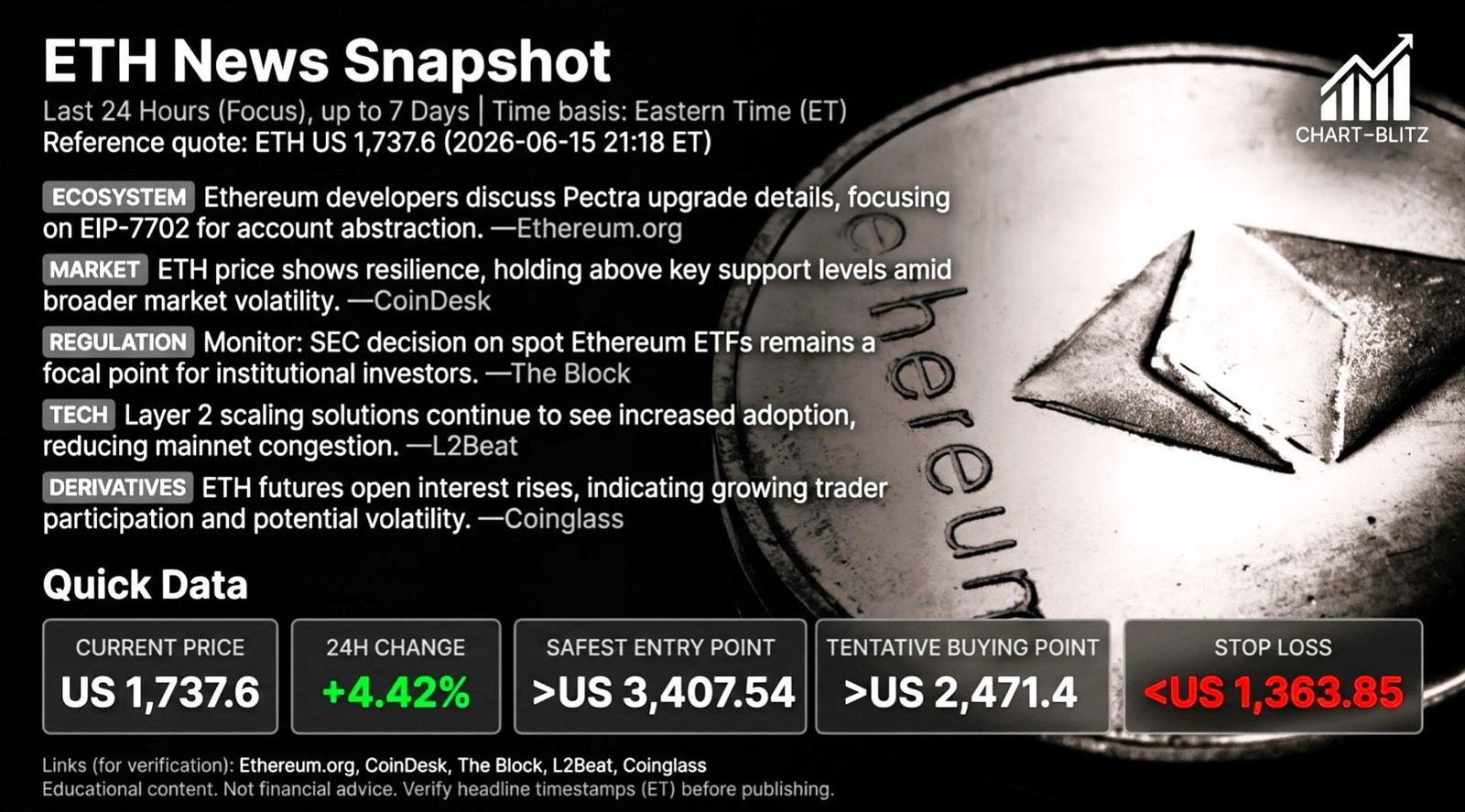
The most shocking news recently is that Ethereum might set a historic record of three consecutive red quarters. According to Coinglass data, ETH experienced two consecutive down quarters in 2022 before rebounding 24% in the following quarter. But will history repeat itself? Or is this a larger trap?
📈Section 1: Weekly Chart — Elliott Wave, VPFR & The Institutional Liquidity Trap
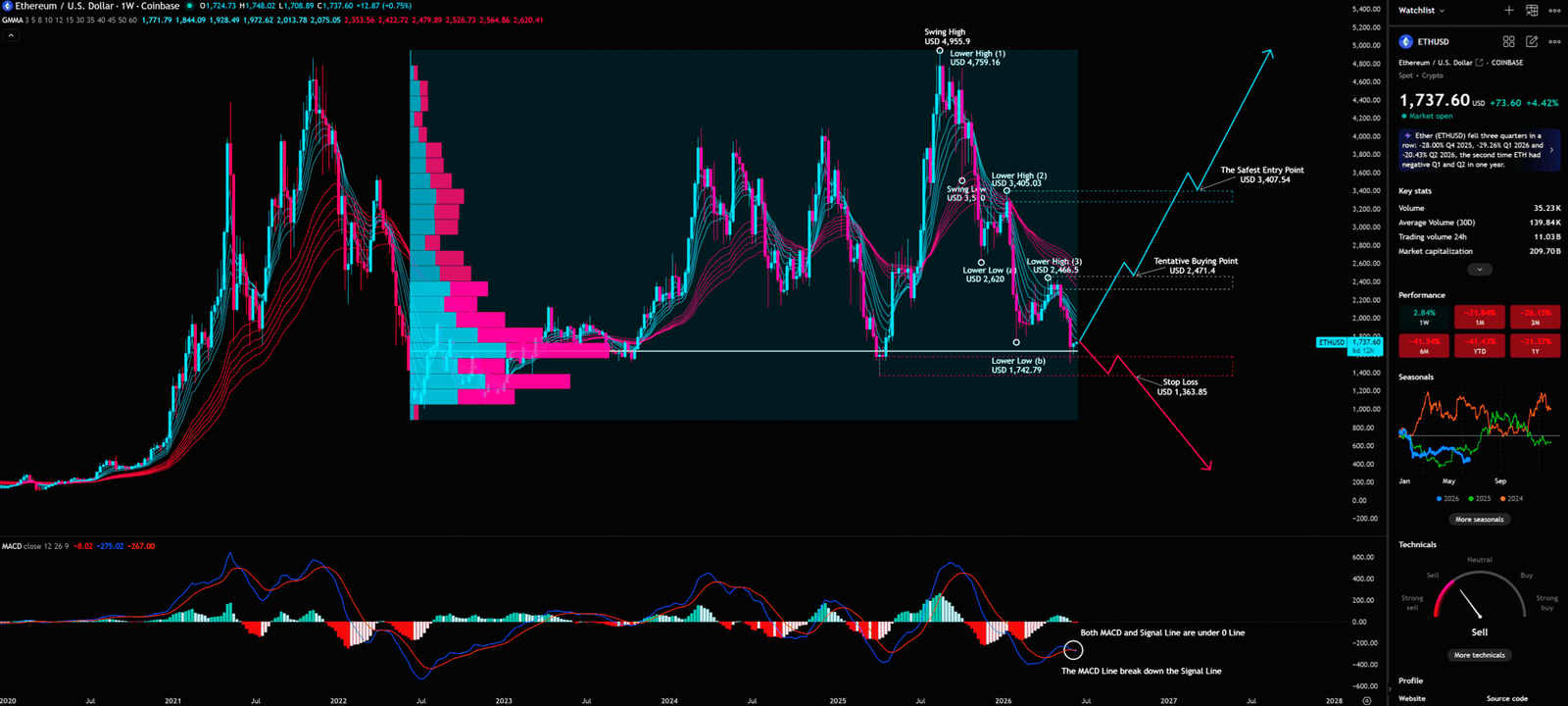
The Chart Already Signaled This: Open the ETH weekly chart, and you’ll discover a chilling truth. The chart clearly displays a “Lower Highs, Lower Lows” descending trend structure. Specifically:
Weekly Timeframe for ETH (Ethereum)
| Key Swing Point | Price Level | Technical Implication |
| Swing High (Peak) | USD 4,955.9 | Bull market top |
| Lower High (1) | USD 4,759.16 | Failed rally, trend weakening |
| Lower High (2) | USD 3,405.03 | Second rally, still below prior high |
| Lower High (3) | USD 2,466.5 | Third rally, downtrend confirmed |
| Lower Low (a) | USD ~3,500 | First significant support |
| Lower Low (b) | USD 1,742.79 | Current critical support level |
VPFR (Volume Profile Fixed Range) Deep Dive:
VPFR is a powerful tool for revealing institutional fund movements. It displays the distribution of trading volume across different price levels within a specific time range, helping traders identify the POC (Point of Control — the price level with the highest concentration of volume) and “Vacuum Zones” — areas lacking historical volume support.
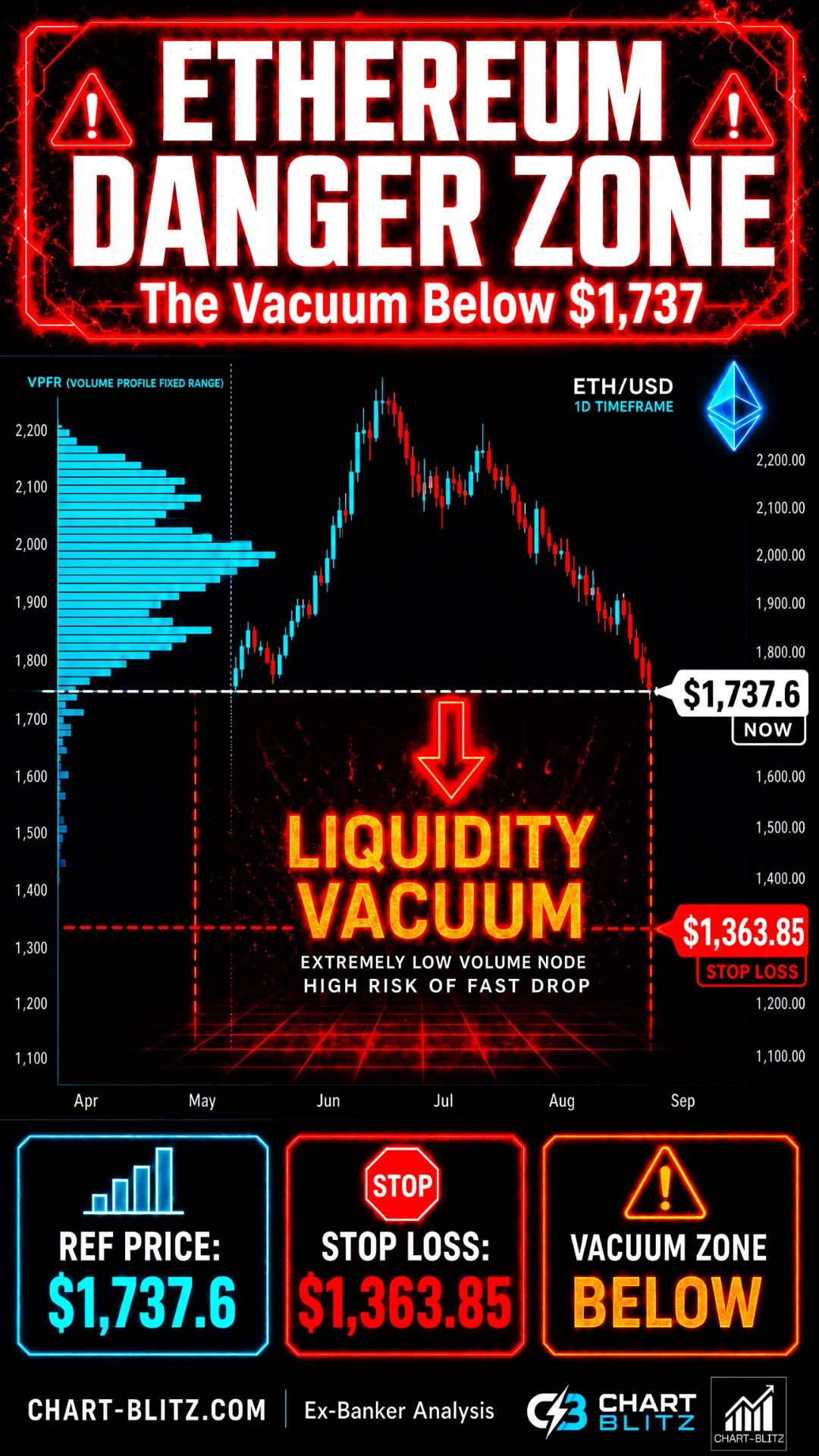
From the VPFR distribution on the chart, the bulk of trading volume is concentrated between 1,742 and 2,600. Below 1,742, volume drops sharply, forming a clear “Vacuum Zone.” This means if ETH breaks below the 1,742 support, there simply won’t be enough buying pressure to absorb the sell-off, and the price will accelerate downward until it reaches the next area with volume support.
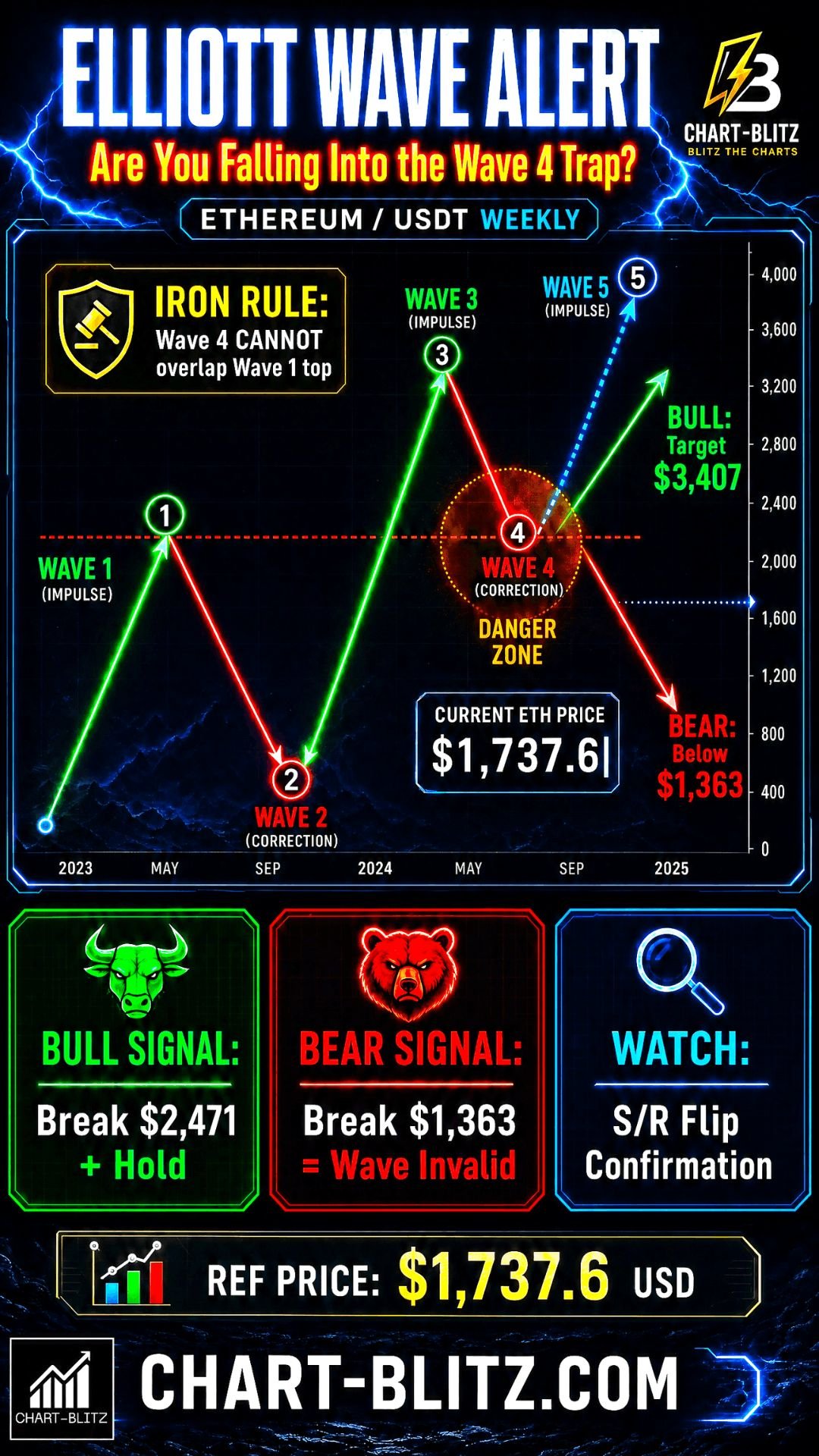
Elliott Wave Iron Rule Warning:
Elliott Wave Theory is a cornerstone of technical analysis. When interpreting the ETH weekly chart, one iron rule must be strictly observed: The bottom of Wave 4 must absolutely not overlap with the top of Wave 1. If this line is breached, the entire assumption of a 1-2-3-4-5 upward impulse wave will be completely shattered. The market might just be part of a larger degree corrective wave (A-B-C), and the true bottom remains unfathomable. One must never easily conclude that a certain downward level is already the Wave 4 bottom!
MACD Signal: The MACD indicator on the chart shows both the MACD line and Signal Line below the 0 line, with the MACD line having broken down below the Signal Line. This is a strong long-term bearish signal, indicating that bearish momentum still dominates the market.
Institutional vs. Retail Perspective:
When retail investors see news about “Pectra upgrades” and “institutional accumulation,” their first reaction is: “This is the bottom, buy quickly!” But institutional thinking is completely different. They ask: “Is there enough liquidity at this level for us to build a position?” and “If we buy heavily here, are there enough retail investors to take the other side?”
When large numbers of retail investors swarm into the market due to bullish news, institutions use these retail buy orders as their “Exit Liquidity,” quietly completing their distribution. Once distribution is complete, the price falls effortlessly into the vacuum zone below. If the big players really wanted to pump the price, why isn’t the trading volume supporting it synchronously?
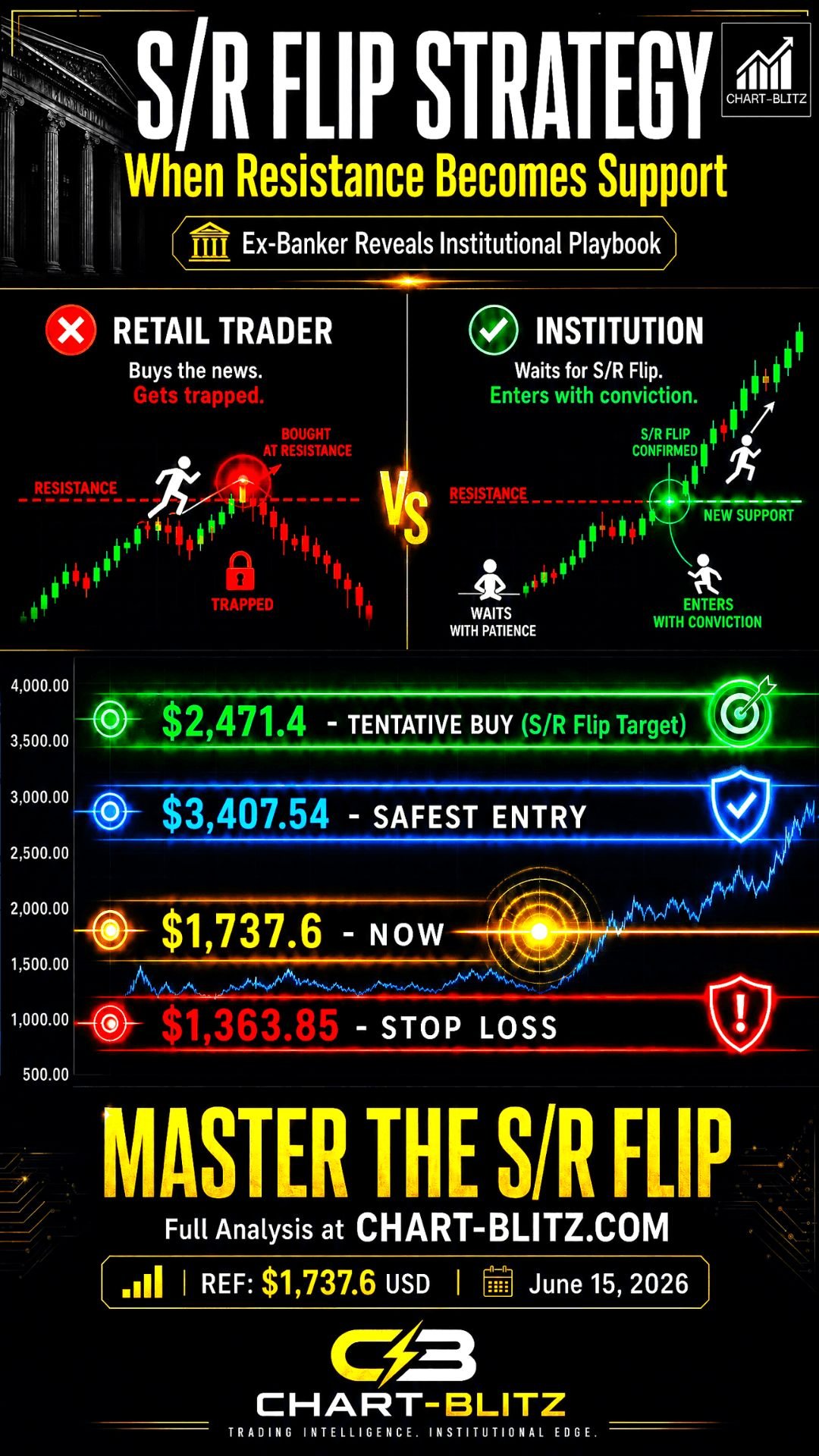
Annotation of Key Levels by Chart-Blitz Analysis Team (Highest Priority):
| Price Level | Annotation | Trading Strategy |
| US 3,407.54 | The Safest Entry Point | Safest entry after breakout and stabilization |
| US 2,471.4 | Tentative Buying Point | Tentative buy, requires additional confirmation signals |
| US 1,737.6 | Current Price (Analysis Baseline) | Currently testing critical support |
| US 1,363.85 | Stop Loss | Cut losses immediately if breached, no exceptions |
📊Section 2: Daily Chart — Fibonacci & GMMA Tug-of-War
Discussions about the Pectra upgrade and EIP-7702 are highly active in the developer community. These technical bullish factors have caused a brief bounce on the daily chart, but is this a genuine trend reversal or just a bull trap?
Daily Timeframe for